
GSR II Mandates Various Safety Equipment For Zero-Kilometer Vehicles
General Safety Regulations (GSR II) are a set of regulations that mandate the inclusion of various safety packages in the standard features of vehicles and aim to increase the level of safety.
GSR II is highly significant for Türkiye. This is because, following the European Union's (EU) Regulation 2019/2144 dated 27.11.2019 (Regulation 2019/2144), Type Approval Regulation on the General Safety of Motor Vehicles and Their Trailers and Components, Systems and Separate Technical Units Designed for Such Vehicles and the Protection of Vulnerable Highway Occupants and Passengers (Regulation), which contains provisions in accordance with Regulation 2019/2144, entered into force in Türkiye.
Under GSR II, new vehicles offered to the market as of 07.07.2024 are required to include various features.
While it was foreseen that GSR II would be implemented in Türkiye as of 07.07.2024, it was announced that the implementation date of GSR II for vehicles with national type approval was postponed to 31.08.2024 with the Regulation Amending the Type Approval Regulation on the General Safety of Motor Vehicles and Their Trailers and Components, Systems and Separate Technical Units Designed for Such Vehicles and the Protection of Vulnerable Highway Occupants and Passengers (Amending Regulation).
It is aimed to establish a common safety level for vehicles in traffic by standardizing the technologies required under GSR II. After the date of entry into force, the sale and circulation of zero-kilometer vehicles that are not equipped with the features stipulated under GSR II shall not be permitted.
The provisions of GSR II can be summarized as follows:
• Intelligent speed assistance, reversing cameras and rear parking sensors, flashers for unexpected breaks, accident data recorders and driver fatigue detection systems have become mandatory for all zero-kilometer vehicles.
• Zero-kilometer cars and vans must be equipped with lane keeping and emergency braking assist; zero-kilometer buses and trucks must be equipped with technologies to better detect potential blind spots, collision avoidance technology for pedestrians and cyclists, and a tire pressure monitoring system.

All rights of this article are reserved. This article may not be used, reproduced, copied, published, distributed, or otherwise disseminated without quotation or Erdem & Erdem Law Firm's written consent. Any content created without citing the resource or Erdem & Erdem Law Firm’s written consent is regularly tracked, and legal action will be taken in case of violation.
Other Contents

Through the Communiqué Amending the Communiqué on the Procedures and Principles Regarding the Implementation of Article 376 of the Turkish Commercial Code No. 6102 (Communiqué) published in the Official Gazette dated December 10th, 2025, and No. 33103, essential amendments are introduced for the calculation method of technical insolvency & bankruptcy…
The Regulation Amending the Regulation on Transport Organization Services was published in the Official Gazette dated 19.06.2025 and numbered 32931. Through this regulation, various amendments were introduced to the Regulation on Transport Organization Services (“Regulation”)...
Recently published amendments in the Official Gazette have introduced significant updates to the regulations governing courier and transportation services. These updates are particularly relevant for businesses operating through online platforms, bringing new obligations and definitions into effect. In this...
The Council of State’s (Council) Board of the Unification of Case Laws’ decision numbered 2021/5 E., 2024/2 K. (Decision) was published in the Official Gazette dated 16.04.2025 and numbered 32872...
On 07.03.2025, the Advertising Board (the Board) published the Press Bulletin (the Bulletin) on the Advertising Board Meeting No. 354 dated 13.02.2025. The Bulletin included the advertisements, promotions and commercial practices that the Board examined within the framework of the Law on Consumer Protection...
Communiqué Amending the Communiqué on the Implementation Principles of the Technology-Oriented Industrial Initiative Program (Communiqué) entered into force through publication in the Official Gazette dated 26.07.2024 and numbered 32613...
The Communiqué on the Implementation Principles of the Digital Transformation Support Program (Communiqué) entered into force through publication in the Official Gazette dated 26.07.2024 and numbered 32613...
The Constitutional Court’s decision dated 18.01.2024 and numbered 2023/12 E., 2024/12 K. (Decision) has been published in the Official Gazette dated 05.03.2024 and numbered 32480. The Constitutional Court decided to annul the provisional Article 31 of the Law on Privatization Applications (Law)...
Railway Operation Authorization Regulation (Regulation) entered into force through publication in the Official Gazette dated 16.02.2024 and numbered 32462. The Regulation repeals the Railway Operation Authorization Regulation published in the Official Gazette dated 19.08.2016 and numbered 29806...
The Regulation on Railway Infrastructure Access and Capacity Allocation (Regulation) entered into force through publication in the Official Gazette dated 28.09.2023 and numbered 32323. The important amendments introduced by the Regulation are summarized...
The Regulation Amending the Regulation on the Procedures and Principles Regarding the Sale and Service of Tobacco Products and Alcoholic Beverages (Regulation) is published in the Official Gazette dated 20.09.2023 and numbered 32315. The amendments introduced by the Regulation are summarized...
The Office of Foreign Assets Control (OFAC) of the United States (US) has included some Turkish companies and an individual in the specially designated nationals and blocked persons list (SDN List) to limit Russia’s ability to acquire, develop and maintain the technology it needs for its war machines. The OFAC’s...
The Constitutional Court’s decision dated 22.06.2023 and numbered 2023/117 E., 2023/121 K. (Decision) has been published in the Official Gazette dated 15.09.2023 and numbered 32310. The Constitutional Court decided to annul a part of paragraph 1 of Article 3 of the Law on the Acquisition of Immovable...
The Communiqué on Procurements to be Made by Direct Procurement Method (Communiqué) is published in the Official Gazette dated 11.07.2023 and numbered 32245. The Communiqué will enter into force on 01.02.2024. Main issues set forth under the Communiqué are...
The Regulation Amending the Regulation on Second Hand Motor Vehicle Trade (Regulation) is published in the Official Gazette dated 06.07.2023 and numbered 32240. The Regulation will enter into force on 15.07.2023. Significant amendments introduced by the Regulation are...
The Regulation on the Amendment to the Regulation (Regulation) on Duty-Free Sales Stores (Amending Regulation) has entered into force through publication in the Official Gazette dated 20.04.2023 and numbered 32169. The key amendments introduced under the Amending Regulation are summarized as...
The Constitutional Court’s decision dated 22.02.2023 and numbered 2022/155 E. 2023/38 K. (Decision) is published in the Official Gazette dated 28.04.2023 and numbered 32174. With the decision, Article 187 of the Turkish Civil Code regarding the surname of women is cancelled...
The German Act on Corporate Due Diligence Obligations in Supply Chains (Law) entered into force on January 1, 2023. The Law imposes significant obligations on German companies in relation to environmental law and human rights, covering their supply chains...
The Resolution of the President (Resolution) numbered 6807 on the Procedures and Principles Regarding the Tenders to be Conducted by the Ministry of Treasury and Finance within the Scope of Subparagraph (b) of Article 3 of the Public Procurement Law No. 4734 entered into force following its publication...
The Regulation on Administrative Sanctions of the Nuclear Regulatory Authority (Regulation) has entered into force through its publication in the Official Gazette dated 24 January 2023 and numbered 32083. Significant provisions introduced by the Regulation are summarized...
The Regulation Amending the Regulation on the Technical Requirements for Alcohol and Alcoholic Beverage Facilities, Procedures and Principles Regarding their Establishment, Operation and Supervision and the Regulation Amending the Regulation on the Procedures and Principles Regarding the Domestic...
The Communiqué on Environmental Impact Assessment Qualification Certificate (Communiqué) entered into force following its publication in the Official Gazette dated 31.12.2022 and numbered 32060. With the Communiqué, the Communiqué on Environmental Impact Assessment Qualification Certificate published in...
The European Council (Council) adopted the 9th Sanction Package (Sanction Package) to be applied against Russian Federation on 16.12.2022. The most notable sanctions imposed by the European Union (EU) against the Russian Federation under the Sanctions Package are summarized...
The Law Amending the Law on the Regulation of Tobacco, Tobacco Products and Alcohol Market and Certain Laws (Law) entered into force following its publication in the Official Gazette dated 10.12.2022 and numbered 32039. Significant amendments introduced by the Law are...
The Law on the Amendment to the Press Law and Certain Laws (Law) is published in the Official Gazette dated 18.10.2022 and numbered 31987. The Law amended a number of laws, most notably Press Law numbered 5187 (Press Law), Law on the Regulation of Internet Publications and Combating...
The Presidential Circular numbered 2022/15 on Investment Program Preparations for the 2023-2025 Period is published in the Official Gazette dated 14.09.2022 and numbered 31953 (bis)...
The Regulation (Amending Regulation) Amending the Regulation on Control of Medical Waste (Regulation) has entered into force through publication in the Official Gazette...
The Constitutional Court Decision dated 20.07.2022 and numbered 2022/22 E. 2022/92 K. has been published in the Official Gazette dated 02.08.2022 and numbered 31911...
The Regulation on Environmental Impact Assessment entered into force through publication in the Official Gazette dated 29.07.2022 and numbered 31907...
The Regulation Amending the Regulation on the Allocation of Public Immovables for Tourism Investments (the “Amendment”) has entered into force through publication in the Official Gazette dated 14 May 2022 and numbered 31835...
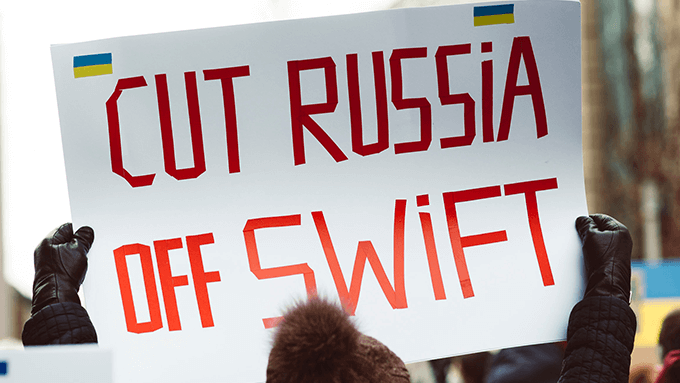
Following Russian Federation’s invasion of Ukraine, many countries, especially the European Union member states, the United States, United Kingdom, Japan and Canada, agreed on imposing heavy economic sanctions against Russia...
German Supply Chain Due Diligence Act (Lieferkettensorgfaltsgesetz) (“Act”) was approved on 11 June 2021 by the German Federal Parliament.
Advertisements on Twitter, Pinterest and Periscope/Scope has been banned in Turkey
Amendment to the Regulation on Measures Regarding Prevention of Laundering Proceeds of Crime and Financing of Terrorism
United States of America decided to impose sanctions against the Russian Federation