
Review of Arbitration Agreement in Mandatory Mediation Procedures
Introduction
This article points out various discussions that may arise when a party applies for a mandatory mediation procedure despite having an arbitration agreement in place, the impact of an arbitration agreement upon mandatory mediation procedures, and its review by the mediator. Pursuing voluntary mediation procedures by the parties, despite having an arbitration agreement in place, and/or in addition to it, and the effect of those procedures on the arbitration agreement, does not fall within the scope of this article.
Mandatory Mediation and Arbitration Agreement as an Exclusion
The condition of applying to mediation prior to filing a lawsuit with the courts was introduced by Law on Mediation in Civil Disputes No. 6325 (“Law No. 6325”) for certain disputes. The violation of this pre-condition is regulated under Article 18/A(2) of the same law, as the refusal of the claim on procedural grounds, without any further action to be taken by the court.
Commercial disputes were included in the scope of mandatory mediation pursuant to Article 20 of Law No. 7155 on Procedures of Initiation of Execution Proceedings Regarding the Receivables Arising from Subscription Agreements. It is regulated under Article 5/A of Turkish Commercial Code No. 6102 (“TCC”) that commercial claims concerning the payment of monies or other types of compensation require a completed procedure of mandatory mediation.
As well, Article 18/A(18) of Law No. 6325 regulates an exemption from mandatory mediation provisions if there is an arbitration agreement between the parties. According to this Article, the provisions on mandatory mediations shall not apply if the dispute is to be resolved through arbitration or another alternative dispute resolution method.
In practice, the courts have applied the above-mentioned provisions, and a number of commercial lawsuits have been rejected on procedural grounds at the very beginning of the proceedings, since the mandatory mediation procedures had not been completed.
The Lack of Jurisdiction of State Courts in the Presence of an Arbitration Agreement
Pursuant to Articles 116(c) and 413 of the Code on Civil Procedures (“CCP”), in the presence of an arbitration agreement, and unless it is rendered invalid, the respondent may present it as a preliminary objection, and the courts shall reject the claim on procedural grounds due to the arbitration agreement in place, at that stage. Therefore, in principle, if there is an arbitration agreement between the parties, the dispute cannot be referred to the state courts.
On the other hand, it is controversial as to whether the courts should determine the validity of the arbitration agreement when an action is brought before the courts.[1] Some scholars argue that the courts should review the validity of the arbitration agreement, in detail, and render its decision at the end of such review. An opposing view argues that upon an objection to arbitration, a court’s review should be limited to a prima facie review, it should reject the case, and leave the actual review of the validity of the arbitration agreement to the arbitral tribunal. The latter view is based on Article 422 of the CCP and Article 7(H) of the International Arbitration Act. Pursuant to those Articles, the arbitral tribunals have the capacity to decide as to their own jurisdiction. Although this principle, referred to as the kompetenz-kompetenz, is acknowledged in general, its scope remains controversial in some respects. However, the pro-arbitration view supports that review should be left to the arbitral tribunals.
Regardless of the accepted view, it is clear that the competence of the state courts to review the validity of the arbitration agreement, and the extent of such review, remains controversial. The performance of such review by a mediator would bring with it other issues.
Applying for Mandatory Mediator Despite Having an Arbitration Agreement
As mentioned, above, applying for a mandatory mediator is the pre-requisite of a case before being brought before the courts. In such case, what should be the impact of an arbitration agreement on the process of mediation when, despite having an arbitration agreement in place, a party applies for mandatory mediation as a pre-requisite prior to a claim being brought before a court?
The first point to consider is that the provisions concerning mandatory mediations shall not apply if there is an arbitration agreement between the parties. Law No. 6325, which is the legal basis of the powers of the mediator, expressly states this in Article 18/A(18). Hence, it would not be possible to proceed with mediation sessions if there is an arbitration agreement in place.
However, when and how could a mediator decide that an arbitration agreement is in place, and that the mediation process should not continue? The mediator should first question whether they can review the presence and the validity of the arbitration agreement, even prima facie, when they are rendering such a decision. At this point, it should be pointed out that the mediator does not have the power to render any decision regarding the dispute, and its duty is to serve as an intermediary to assist the parties to meet and negotiate a settlement. Also, pursuant to Article 15/4 of Law No. 6325, only judges are vested with the authority to make judicial actions, and the mediator does not hold that power. Likewise, in the presence of a view that argues the validity of an arbitration agreement should not be considered by the court, a fortiori the mediator shall not be able to conduct such review. Under these circumstances, the mediator may decide that the dispute is not subject to provisions on mandatory mediation when an objection is made on the basis of an arbitration agreement being in place. In this regard, it might be considered that the mediator could decide that the dispute is not eligible for mediation, pursuant to Article 17/d of Law No. 6325.[2]
In this case, another concern should be considered. If the mandatory mediation procedure is not completed, an action may not be brought before the courts. Therefore, hypothetically, if the arbitration agreement is invalid, the claimant’s right to claim the invalidity of the arbitration agreement before the courts will be frustrated, if the mediator decides as suggested, above. This would present a greater concern, arguing that the courts should review the validity of the arbitration agreement beyond prima facie examination. On the other hand, if it is to be accepted that the court should not perform any substantial review, this concern vanishes.
Lastly to consider is the impact of participation of the parties to mandatory mediation sessions respecting the arbitration agreement. If one of the parties initiates the mandatory mediation procedure, and the other party involved in this procedure raises no objection, would it be possible to argue that the parties have implicitly abrogated the arbitration agreement? This question should be answered to the negative. Since mediation is not a judicial proceeding, whether or not the first objections were presented at this stage should not be sought. On the other hand, it would be reasonable to raise this arbitration objection during the mediation meetings, and have this objection noted in the meeting minutes, since the mandatory mediation sessions were accepted as the preliminary stage of the judicial proceedings.
Conclusion
The mandatory mediation provisions were adopted to ease the workload of the courts, and they do not apply, in principle, if the parties have already agreed to an alternative dispute resolution method, including arbitration. However, there is no obstacle for a party to initiate a mandatory mediation despite having an arbitration agreement in place. In such case, the mediator should remain within its powers, and should refrain from making any legal statement, either in favour, or against, the arbitration agreement.
[1] Regarding these discussions, please see. Öztürk, Selen: “The Objection of Arbitration and the Courts’ Degree of Review of the Arbitration Agreement”, Erdem & Erdem Newsletter, February 2014.
[2] However, it is open to discussion as to whether this is, indeed, an eligibility or a competence issue.

All rights of this article are reserved. This article may not be used, reproduced, copied, published, distributed, or otherwise disseminated without quotation or Erdem & Erdem Law Firm's written consent. Any content created without citing the resource or Erdem & Erdem Law Firm’s written consent is regularly tracked, and legal action will be taken in case of violation.
Other Contents

In its decision dated 29 April 2025 and numbered E. 2024/1700, K. 2025/1758 (the Decision), the 6th Civil Chamber of the Turkish Court of Cassation (the Court of Cassation) made significant findings concerning the setting aside of an arbitral award rendered…

Arbitration is a system that enables parties, within the framework of freedom of contract, to partially depart from state court proceedings and resolve their disputes through a private adjudicatory mechanism. Under Turkish law, the legal remedy available against arbitral…

On 29 January 2026, the International Chamber of Commerce’s (“ICC”) has published a report on expedited procedure provisions (“Report”). The Report is prepared by a Task Force established within the ICC’s Commission on Arbitration and ADR. The Report compiles…

Emergency arbitration addresses the need for interim protection before the arbitral tribunal is constituted in institutional arbitrations. Arbitral institutions establish short timeframes to ensure parties can obtain interim relief quickly. For example, the International Chamber of Commerce (“ICC”) requires that the emergency...

International arbitration remains the preferred mechanism for resolving complex cross-border disputes. Yet despite its advantages—neutrality, enforceability, flexibility—arbitration is frequently criticized for being too slow, too expensive, and too procedurally heavy. Often, parties proceed through hearings and...

For arbitral awards rendered in international commercial arbitration to produce legal effects in foreign jurisdictions, they must be subjected to proceedings for “recognition” and “enforcement.” This process is governed by the New York Convention as well as by the provisions of the Law on Private International Law...

Arbitrability, the determination of whether a specific subject matter can be resolved through arbitration, constitutes a fundamental aspect of arbitration within the scope of international commercial dispute resolution. This concept draws a delicate balance between party autonomy—a fundamental principle of arbitration...

The recognition, enforcement, and annulment of foreign court and arbitral awards in Türkiye are processes in which public policy emerges as one of the most critical criteria for review, both in theory and in practice. The Court of Cassation decisions determine the direction of case law regarding the scope and...

As is well known, the action for annulment of objection is a special type of lawsuit regulated under Article 67 of the Turkish Execution and Bankruptcy Law No. 2004 (“EBL”). The primary objective of this action is to nullify a debtor’s objection to execution proceedings. Despite its procedural function of facilitating...

On 16 December 2024, the London Court of International Arbitration (“LCIA”) released its third batch of challenge decisions covering the period from 22 July 2017 to 31 December 2022. The LCIA has also issued a detailed commentary that identifies key legal themes and analytical trends, offering practitioners...

The International Chamber of Commerce (“ICC”) has published its report on the dispute resolution statistics for 2023 (“Report”) , shedding light on the evolving landscape of international arbitration...

Syndicated loans undoubtedly hold a significant position among global financing models. In 2023 alone, 3,655 syndicated loans were provided to companies in the US, with their total value reaching USD 2.4 trillion...

Preliminary attachment refers to the temporary seizure of a debtor's assets to secure a creditor's claim. While it serves as a vital instrument for safeguarding the rights of creditors, it is subject to specific and stringent conditions under Turkish law to prevent any potential misuse...

One of the most important reasons for parties to choose arbitration is the opportunity to freely choose their arbitrators. This freedom granted to the parties also distinguishes arbitration from proceedings before state courts, where the parties are deprived of the power to determine the judges who will conduct the...

The 6th Civil Chamber of the Court of Cassation ruled on October 12, 2022, that national courts have jurisdiction over objections to provisional measures in international arbitration disputes...

The declaration of intent to resolve disputes through arbitration is the fundamental constituent element of an arbitration agreement. To speak of a valid arbitration agreement, the parties' intention to arbitrate must emerge in a way that leaves no room for dispute...

In the wake of the evolving dynamics of commercial transactions, the Netherlands Arbitration Institute Foundation (NAI) announced new arbitration rules . 2024 NAI Arbitration Rules are in force as of 1 March 2024 and will be applicable on proceedings filed on or after this date...

With the global shift to online activities, domain names play a crucial role in identifying businesses. It is more common than ever for a domain name to be registered that is confusingly similar to a trademark or service mark...
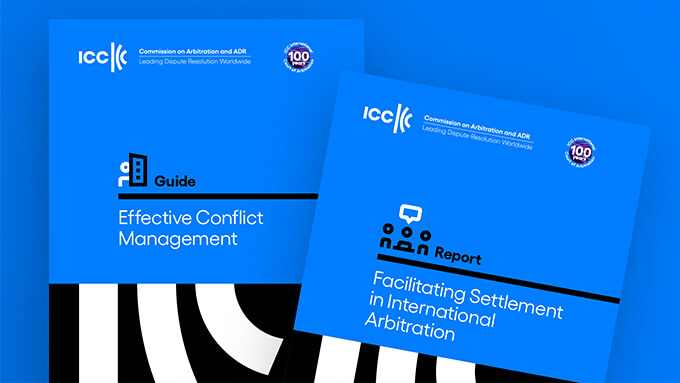
The ICC Commission on Arbitration and ADR (“Commission”) published a new guide and report with the aim to increase awareness on alternative dispute resolution (“ADR”) mechanisms to prevent disputes and strengthen the relationship between all stakeholders.The Guide on Effective Conflict Management...

Mergers and Acquisitions (“M&A”) are restructuring of companies or assets through various types of financial transactions, such as mergers, acquisitions, purchase of assets, or management acquisitions. This Newsletter article covers M&A disputes being solved before arbitral tribunals.

In the context of arbitration practice, the principle of revision au fond means that the courts can not examine the merits of a dispute when reviewing an arbitral award. This principle is most commonly encountered in set aside and enforcement proceedings. An arbitral award is evidence of the parties’ willingness...

Under Turkish law, parties may agree on the settlement of disputes that have arisen or may arise, regarding the rights that they can freely dispose of, by arbitration. However, disputes which are not subject to the will of parties, such as the disputes relating to in rem rights of immovables, bankruptcy law...

On 4 September 2020, a research project “Does a Right to a Physical Hearing Exist in International Arbitration?” was launched by an International Council for Commercial Arbitration (“ICCA”) taskforce. Due to the Covid-19 pandemic, many arbitration hearings were held online. Many institutional rules...

Dubai International Arbitration Center amended its Arbitration Rules on 25 February 2022. The 2022 Arbitration Rules were published on 2 March 2022 and came into effect on 21 March 2022. The Rules will be applied to arbitrations that are filed after 21 March 2022; unless parties agree otherwise...

In the aftermath of the Achmea decision, controversies on intra-EU arbitrations continue. Most recently, the Paris Court of Appeal has annulled two arbitral awards rendered against Poland. Meanwhile, the Higher Regional Court of Berlin has refused to declare that an Irish investor’s ICSID claim...


Under Turkish law, the legal remedy that can be applied against arbitral awards is an annulment action. Law on International Arbitration No. 4686 (“IAL”) finds its application area in arbitration proceedings where Turkey is the place of arbitration...

It is well known that following a decision of the Court of Justice of the European Union, problems arose related to arbitration of intra-EU disputes, and particularly arbitration under the Energy Charter Treaty...

Arbitration in corporate law contains controversial elements in many respects, especially the issue of arbitrability. Even in legal systems where these disputes are considered to be arbitrable, uncertainties remain on whether an arbitration clause can be included in the articles of...

Arbitration has benifited from a great increase in the use of technology which has directly effected the conduct of proceedings. More particularly, with digitalization, the way that we conduct arbitration proceedings has been changed to reflect the current needs of parties, with an aim of increasing time...