
Jurisdiction of Courts over Objections to Provisional Measures in International Arbitration
Introduction
The 6th Civil Chamber of the Court of Cassation ruled on October 12, 2022, that national courts have jurisdiction over objections to provisional measures in international arbitration disputes.1
There were conflicting decisions among different chambers of the Regional Courts of Appeal regarding whether objections to provisional measures in disputes subject to arbitration with foreign elements should be evaluated by the first instance court that issued the measure or the arbitral tribunal handling the main dispute.2 To resolve these contradictions, the President’s Board of the Istanbul Regional Court of Appeal applied to the Court of Cassation with decision number 2022/51 dated July 1, 2022.
Conflicting Decisions
45th Civil Chamber of the Istanbul Regional Court of Appeal Decision
In the dispute before the 45th Civil Chamber, after the first instance court issued a provisional measure, the parties proceeded to arbitration under the International Chamber of Commerce. When an objection was raised against the provisional measure, the local court decided that the arbitral tribunal should evaluate the objection. The 45th Civil Chamber examined whether the objection to the provisional measure should be assessed by the first instance court that issued the measure or by the arbitral tribunal handling the main dispute.
The Chamber evaluated the provisions on provisional measures and arbitration under the Code of Civil Procedure numbered 6100 (“CCP”). According to these provisions: (i) an objection to a provisional measure issued by a Turkish court should be evaluated by the Turkish court handling the main case, and (ii) in disputes without foreign elements as defined under the International Arbitration Law numbered 4686 (“IAL”) where the seat of arbitration is Turkey, the arbitral tribunal may modify or revoke the court-issued provisional measure.
The 45th Civil Chamber concluded that: (i) the annulment of a provisional measure issued by a Turkish court in an arbitration proceeding with foreign elements by the arbitral tribunal would interfere with the jurisdiction of Turkish courts, (ii) the provisions of the CCP on this matter do not apply to the case at hand, and (iii) objections to the provisional measure should be handled by the first instance court that issued the measure.
15th Civil Chamber of the Istanbul Regional Court of Appeal Decision
In the dispute before the 15th Civil Chamber, despite the application of Algerian law, the party requested a provisional measure to prevent the realization of letters of guarantee during the litigation process in Algeria. The local court accepted the provisional measure, which was then objected to by the defendant. The local court rejected the objection, and the defendant appealed this decision.
During the appeal, the 15th Civil Chamber ruled that: (i) under Article 6 of the IAL, a party may request provisional measures from courts before or during arbitral proceedings, and such a court decision does not violate the arbitration agreement as this is a statutory requirement, and (ii) since arbitral proceedings had already commenced before the first instance court’s rejection decision, the objection to the provisional measure should be decided by the arbitral tribunal that would handle the main case.
Review of the Court of Cassation
Due to the conflicting decisions between the 45th and 15th Civil Chambers, the matter was brought before the Court of Cassation. The Court emphasized the importance of provisional measures in arbitral proceedings and the limited jurisdiction of courts in this context.3 Provisional measures fall within the scope of temporary legal protections, and it is a common issue in practice to determine the appropriate authority to apply for such measures.
The provisions for temporary legal protections differ between the CCP and the IAL. While the CCP grants arbitral tribunals the authority to modify or revoke temporary legal protections issued by courts, the IAL does not provide such authority. Despite the general adoption of the IAL provisions in the arbitration-related sections of the CCP in 2011, a distinction was made for temporary legal protections. According to the Court of Cassation, this difference stems from the distinct characteristics of national and international arbitration and has not been eliminated in subsequent amendments to the IAL, indicating a deliberate legislative choice.
To resolve the conflict between the decisions of the 15th and 45th Civil Chambers, the Court of Cassation first assessed which law would apply. According to Article 1 of the IAL, the IAL applies to disputes with a foreign element where the seat of arbitration is designated as Turkey or where the IAL is chosen by the parties, arbitrator, or arbitral tribunal. In the disputed cases, although there were foreign elements, the place of arbitration was not designated as Turkey, nor were the other conditions for applying the IAL met. However, an exception in Article 1 of the IAL stipulates that Article 6 of the IAL applies to provisional measures in arbitrations with foreign elements, even if the place of arbitration is not Turkey. The Court determined that Article 6 of the IAL would apply to these disputes.
Article 6 of the IAL does not explicitly state which authority is competent to hear objections to provisional measures issued by Turkish courts. The Court of Cassation indicated that the general nature of international arbitration, the characteristics of temporary legal protections, and the content of Article 6 of the IAL must be jointly evaluated to conclude.
Under Article 6 of the IAL, an arbitral tribunal cannot issue provisional attachment or provisional injunction orders that require enforcement by executive bodies or other official authorities. Similarly, an arbitral tribunal cannot issue provisional measures or attachments binding on third parties.
In the disputes subject to conflict, the decision involved preventing the realization of a bank letter of guarantee, thus affecting the bank as a third party. The Court of Cassation held that issuing decisions affecting third parties, like banks, would violate the principle of relativity in arbitration and Article 6 of the IAL.
The Court of Cassation emphasized that under Article 6 of the IAL, provisional measures or attachments issued by courts before or during arbitration proceedings automatically cease if the arbitral tribunal rejects the main claim or if the arbitral tribunal's decision becomes enforceable. The preamble of this article indicates that such court-issued measures cannot be annulled by an arbitral tribunal’s decision but only cease under specific conditions outlined in the IAL. The Court concluded that an arbitral tribunal does not have the authority to modify or annul court-issued provisional measures.
Additionally, the Court of Cassation noted that the rule in the CCP, which states that the competent court for provisional measures before a case is filed should be the court that will hear the main case and thereafter the court where the main case is heard, does not apply in this context. According to Article 17 of the IAL, unless otherwise provided, the provisions of the CCP do not apply to matters regulated by the IAL. Court of Cassation stated that as there is no contrary provision in the IAL on this matter, the CCP’s provision does not apply.
Conclusion
In conclusion, the Court of Cassation ruled that despite the existence of an arbitration agreement, Turkish courts can issue provisional measures in disputes with foreign elements. Objections to such provisional measures should be evaluated by Turkish courts, regardless of whether arbitral proceedings have commenced.

- The 6th Civil Chamber of the Court of Cassation, dated 12.10.2022, 3529/4699.
- There is a conflict between the decision given in the Case No. 2017/825 of the 15th Civil Chamber of the Istanbul Regional Court of Appeal and the decision given in the Case No. 2020/2281 of the 45th Civil Chamber of the Istanbul Regional Court of Appeal.
- Erdem Kamiloğlu, Mehveş / Erdem, Orhan Emin: “Milletlerarası Tahkim Yargılamasında Mahkemelerin Yetkisinin Kapsamı ve Sınırları”, Festschrift for Prof. Dr. H. Ercüment Erdem, Volume 1, Istanbul 2023, pp. 675-681.
All rights of this article are reserved. This article may not be used, reproduced, copied, published, distributed, or otherwise disseminated without quotation or Erdem & Erdem Law Firm's written consent. Any content created without citing the resource or Erdem & Erdem Law Firm’s written consent is regularly tracked, and legal action will be taken in case of violation.
Other Contents

In its decision dated 29 April 2025 and numbered E. 2024/1700, K. 2025/1758 (the Decision), the 6th Civil Chamber of the Turkish Court of Cassation (the Court of Cassation) made significant findings concerning the setting aside of an arbitral award rendered…

Arbitration is a system that enables parties, within the framework of freedom of contract, to partially depart from state court proceedings and resolve their disputes through a private adjudicatory mechanism. Under Turkish law, the legal remedy available against arbitral…

On 29 January 2026, the International Chamber of Commerce’s (“ICC”) has published a report on expedited procedure provisions (“Report”). The Report is prepared by a Task Force established within the ICC’s Commission on Arbitration and ADR. The Report compiles…

Emergency arbitration addresses the need for interim protection before the arbitral tribunal is constituted in institutional arbitrations. Arbitral institutions establish short timeframes to ensure parties can obtain interim relief quickly. For example, the International Chamber of Commerce (“ICC”) requires that the emergency...

International arbitration remains the preferred mechanism for resolving complex cross-border disputes. Yet despite its advantages—neutrality, enforceability, flexibility—arbitration is frequently criticized for being too slow, too expensive, and too procedurally heavy. Often, parties proceed through hearings and...

For arbitral awards rendered in international commercial arbitration to produce legal effects in foreign jurisdictions, they must be subjected to proceedings for “recognition” and “enforcement.” This process is governed by the New York Convention as well as by the provisions of the Law on Private International Law...

Arbitrability, the determination of whether a specific subject matter can be resolved through arbitration, constitutes a fundamental aspect of arbitration within the scope of international commercial dispute resolution. This concept draws a delicate balance between party autonomy—a fundamental principle of arbitration...

The recognition, enforcement, and annulment of foreign court and arbitral awards in Türkiye are processes in which public policy emerges as one of the most critical criteria for review, both in theory and in practice. The Court of Cassation decisions determine the direction of case law regarding the scope and...

As is well known, the action for annulment of objection is a special type of lawsuit regulated under Article 67 of the Turkish Execution and Bankruptcy Law No. 2004 (“EBL”). The primary objective of this action is to nullify a debtor’s objection to execution proceedings. Despite its procedural function of facilitating...

On 16 December 2024, the London Court of International Arbitration (“LCIA”) released its third batch of challenge decisions covering the period from 22 July 2017 to 31 December 2022. The LCIA has also issued a detailed commentary that identifies key legal themes and analytical trends, offering practitioners...

The International Chamber of Commerce (“ICC”) has published its report on the dispute resolution statistics for 2023 (“Report”) , shedding light on the evolving landscape of international arbitration...

Syndicated loans undoubtedly hold a significant position among global financing models. In 2023 alone, 3,655 syndicated loans were provided to companies in the US, with their total value reaching USD 2.4 trillion...

Preliminary attachment refers to the temporary seizure of a debtor's assets to secure a creditor's claim. While it serves as a vital instrument for safeguarding the rights of creditors, it is subject to specific and stringent conditions under Turkish law to prevent any potential misuse...

One of the most important reasons for parties to choose arbitration is the opportunity to freely choose their arbitrators. This freedom granted to the parties also distinguishes arbitration from proceedings before state courts, where the parties are deprived of the power to determine the judges who will conduct the...

The declaration of intent to resolve disputes through arbitration is the fundamental constituent element of an arbitration agreement. To speak of a valid arbitration agreement, the parties' intention to arbitrate must emerge in a way that leaves no room for dispute...

In the wake of the evolving dynamics of commercial transactions, the Netherlands Arbitration Institute Foundation (NAI) announced new arbitration rules . 2024 NAI Arbitration Rules are in force as of 1 March 2024 and will be applicable on proceedings filed on or after this date...

With the global shift to online activities, domain names play a crucial role in identifying businesses. It is more common than ever for a domain name to be registered that is confusingly similar to a trademark or service mark...
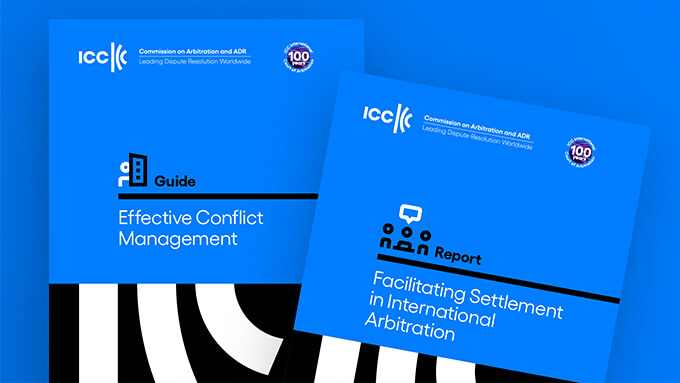
The ICC Commission on Arbitration and ADR (“Commission”) published a new guide and report with the aim to increase awareness on alternative dispute resolution (“ADR”) mechanisms to prevent disputes and strengthen the relationship between all stakeholders.The Guide on Effective Conflict Management...

Mergers and Acquisitions (“M&A”) are restructuring of companies or assets through various types of financial transactions, such as mergers, acquisitions, purchase of assets, or management acquisitions. This Newsletter article covers M&A disputes being solved before arbitral tribunals.

In the context of arbitration practice, the principle of revision au fond means that the courts can not examine the merits of a dispute when reviewing an arbitral award. This principle is most commonly encountered in set aside and enforcement proceedings. An arbitral award is evidence of the parties’ willingness...

Under Turkish law, parties may agree on the settlement of disputes that have arisen or may arise, regarding the rights that they can freely dispose of, by arbitration. However, disputes which are not subject to the will of parties, such as the disputes relating to in rem rights of immovables, bankruptcy law...

On 4 September 2020, a research project “Does a Right to a Physical Hearing Exist in International Arbitration?” was launched by an International Council for Commercial Arbitration (“ICCA”) taskforce. Due to the Covid-19 pandemic, many arbitration hearings were held online. Many institutional rules...

Dubai International Arbitration Center amended its Arbitration Rules on 25 February 2022. The 2022 Arbitration Rules were published on 2 March 2022 and came into effect on 21 March 2022. The Rules will be applied to arbitrations that are filed after 21 March 2022; unless parties agree otherwise...

In the aftermath of the Achmea decision, controversies on intra-EU arbitrations continue. Most recently, the Paris Court of Appeal has annulled two arbitral awards rendered against Poland. Meanwhile, the Higher Regional Court of Berlin has refused to declare that an Irish investor’s ICSID claim...


Under Turkish law, the legal remedy that can be applied against arbitral awards is an annulment action. Law on International Arbitration No. 4686 (“IAL”) finds its application area in arbitration proceedings where Turkey is the place of arbitration...

It is well known that following a decision of the Court of Justice of the European Union, problems arose related to arbitration of intra-EU disputes, and particularly arbitration under the Energy Charter Treaty...

Arbitration in corporate law contains controversial elements in many respects, especially the issue of arbitrability. Even in legal systems where these disputes are considered to be arbitrable, uncertainties remain on whether an arbitration clause can be included in the articles of...

Arbitration has benifited from a great increase in the use of technology which has directly effected the conduct of proceedings. More particularly, with digitalization, the way that we conduct arbitration proceedings has been changed to reflect the current needs of parties, with an aim of increasing time...